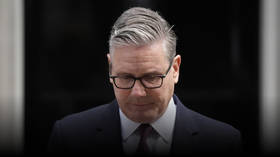
Why was Keir Starmer’s government so unpopular?

British Prime Minister Keir Starmer will leave office, as deeply unpopular a politician as Britain has seen in decades. He won the leadership of the Labour Party from Jeremy Corbyn, whom he accused of fostering anti-Semitism, leading it to a landslide win in 2024.
Since then, his approval rating has plummeted and he’s suffered one defeat after another, culminating in the disastrous loss of 1,400 seats in British Council elections. But what is it about Starmer that made his government so uniquely unpopular?
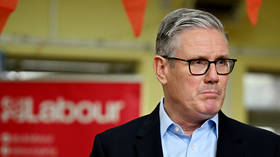
Labour’s victory in the general election of 2024 was the party’s best result in more than two decades. Ending 14 years of Conservative rule, the election swept Starmer into Downing Street with a 174-seat majority and a level of public goodwill that none of his Tory predecessors had enjoyed.
How unpopular was Keir Starmer?
The honeymoon period was brief. Within a month of the election, Starmer’s net approval rating fell from plus seven to zero, with 52% of Britons telling Ipsos that they felt the country was heading “in the wrong direction.” According to YouGov, his net approval sat at –48 on their polling scale (not a percentage), making him the least popular prime minister in recent history.
After losing 187 local council seats in England last year, Labour lost over 1,400 in the elections of May 2026, amid a dramatic rise for Nigel Farage's Reform UK.
Why did Starmer decide to quit?
Calls for Starmer’s resignation came not only from the opposition – including the triumphant Nigel Farage’s Reform UK – but crucially from within his own party. His own parliamentary party told him it will not support him.
According to The Times, Energy Secretary Ed Miliband urged Starmer to begin “planning his resignation” in April. Several senior ministers reportedly confirmed to Starmer over the weekend that they would not support him, and he announced his decision to quit on Monday morning in a Downing Street press conference.
Starmer’s tax and austerity fails
In his first address to the nation after taking office in 2024, Starmer announced that his government had “discovered a £22 billion ($29.9 billion) black hole in the public finances,” and would have to make “unpopular decisions” to fix it. This translated into the fastest rising tax rates in the developed world, according to the OECD, despite having promised to reduce them.
ADMIN POST@Keir_Starmer highlights our out of control migration system which he has done little to nothing about.He talks about a 22 billion pound 'black hole' yet he continues to pay 5.38 billion pounds per year for illegal economic migrants to be housed in hotels all… pic.twitter.com/ayptgAsmta
— Tommy Robinson 🇬🇧 (@TRobinsonNewEra) November 29, 2024
Starmer hiked income and dividend taxes by 2%, increased national insurance taxes paid by employers, and raised property taxes. Between July 2024 and November 2025, Starmer’s government imposed a new tax or increased an old one every ten days, according to the Taxpayers’ Alliance.
His Conservative predecessors presided over an historic decline in British living standards and a rise in energy costs and inflation, both of which soared after the UK cut itself off from Russian fossil fuels in 2022. Voters expecting Starmer to ease this burden were left short-changed, however, with the PM announcing sweeping welfare cuts last year. Public outcry forced Starmer to roll back some of these cuts, including a deeply unpopular slashing of the winter fuel allowance for pensioners.
“We had 14 years of Conservative austerity,” Green Party leader Zack Polanski told reporters in May. “Keir Starmer was voted in on a promise of change and, actually, what we’ve seen is very little change, and in many ways things have got worse.”
Two-Tier Keir: Criminalizing speech
If Starmer’s tax hikes and welfare cuts angered the left, his response to a spate of anti-immigration riots in late 2024 infuriated the right. Hundreds of British citizens were arrested for making anti-immigrant social media posts, and violent criminals were released from prison early so that rioters and those supporting them online could be jailed.
Two Tier KeirNo justice for severe, violent crimes, but prison for social media posts pic.twitter.com/QcK4o74Yla
— Elon Musk (@elonmusk) January 2, 2025
Starmer was drawn into a public spat with X owner Elon Musk, who referred to the PM as “two-tier Keir” over his apparent prioritization of speech crimes over real ones. His pushing of the Online Safety Bill, which critics say will further stifle free speech in Britain, then drew the ire of US Vice President J.D. Vance, who told Starmer to his face that “there have been infringements on free speech that affect not just the British… but also affect American technology companies and by extension, American citizens.”
These issues, coupled with Starmer’s failure to reduce illegal immigration, helped Reform UK emerge as the big winner on Friday, picking up at least 1,200 seats.
Palestine on the ballot
After ousting Jeremy Corbyn as Labour leader in 2020, Starmer dropped all of Corbyn’s pro-Palestine policies and insisted that the party had cleansed itself of “anti-Semitism,” refusing to recognize the infiltration of the party by pro-Israel staff, journalists and advocacy groups.
Whereas Corbyn was a member of the Palestine Solidarity Campaign and supported a boycott on goods from occupied Palestinian territories, Starmer refused demands from within his party to call for a ceasefire in Gaza in late 2023, and publicly affirmed Israel’s right to cut off power and water to the strip’s 2 million residents.
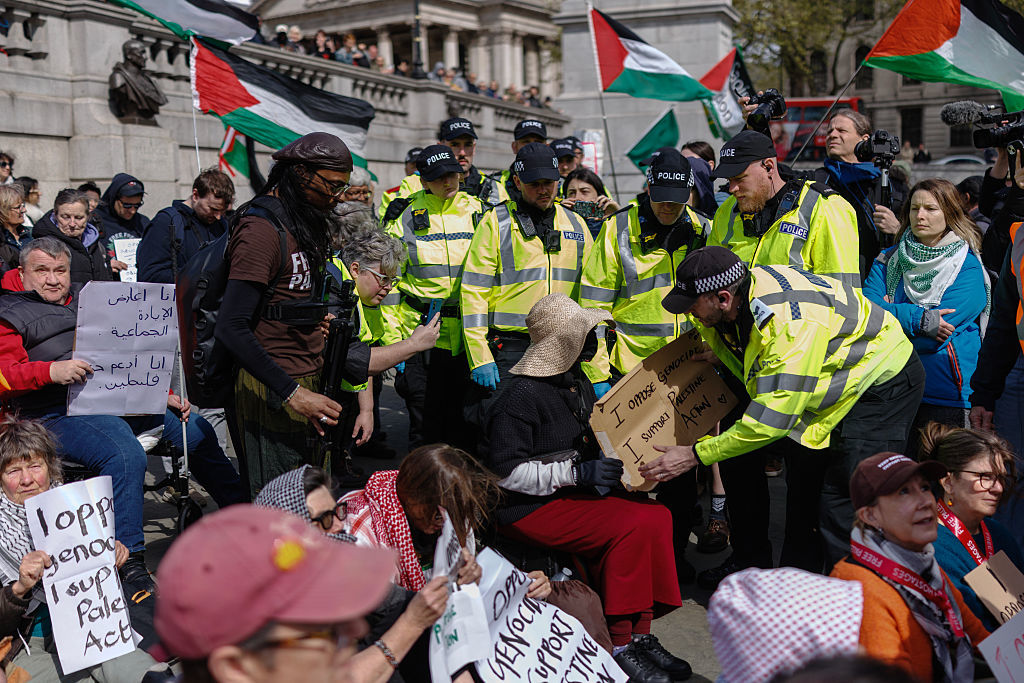
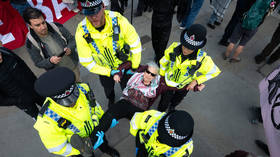
Starmer since reversed his position, backing a ceasefire and two-state solution to the Israel-Palestine conflict, only after left-wing and Muslim voters abandoned his party in droves over his listing of ‘Palestine Action’ as a terrorist organization, the arrests of thousands of protesters for voicing support for said organization, and his calls for “policing of language” and banning of anti-Israel protests.
The Green Party has made the Palestinian issue a central part of its platform, and won a crucial by-election in Manchester earlier this year by courting Muslim voters. “Palestine is one of the elements on the ballot,” Polanski said ahead of Thursday’s elections. “I think lots of people feel very strongly both about their local services – as they should do – and feel equally strongly that a reprehensible genocide is happening.”
The Epstein connection
Few scandals smeared Starmer’s reputation as thoroughly as the Mandelson affair. Peter Mandelson served as Starmer’s ambassador to the US between February and September 2025, when he was dismissed over his long-standing relationship with pedophile financier Jeffrey Epstein. Starmer was apparently aware of Mandelson’s ties to Epstein when he appointed him envoy, but was forced to fire him after emails emerged in which Mandelson called Epstein his “best pal,” and encouraged him to “fight for early release” from prison in 2008.
Mandelson was arrested in February, and is currently being investigated for lobbying on behalf of Epstein in the late 2000s, and leaking classified information to the notorious sex offender.
Starmer’s chief of staff, Morgan McSweeney, took the blame for appointing a known associate of Epstein, and resigned in February.
The bottom line
Starmer’s policy record is enough to account for the surge in support for left- and right-wing alternatives on Friday. After two years of Labour leadership, Britons are poorer, less free, and more divided.
His policy failures, however, are only one aspect of his unpopularity. The Labour leader also inspires a level of visceral, gut-level hatred unseen in modern British politics: he’s been described by commentators as “useless and lacking in charisma,” “empty, brittle, [and] wooden,” and endured chants of “Keir Starmer is a wanker” from right-wing and left-wing crowds alike.
Within Labour, figures like Ed Miliband likely think that they can win back support by distancing themselves from Starmer and appointing a new figurehead to sell their message.
The clear victory for Labour’s Andy Burnham in the recent Manchester by-election signaled a ground-swell of support for a new leader, less corrupted by power and not as obviously a member of the London elite, so reviled by supporters on left and right alike.
Polanski and Farage both think that the time of the traditional Labour/Conservative duopoly is gone.
Farage told reporters that May’s election results represent “a complete reshaping of British politics in every way,” while Polanski said that “the new politics is the Green Party vs. Reform.”
In a new post on his Substack on Monday, Farage denounced Labour’s record before claiming “Starmer isn’t the first prime minister I’ve deposed, and he won’t be the last.”